 EN
EN
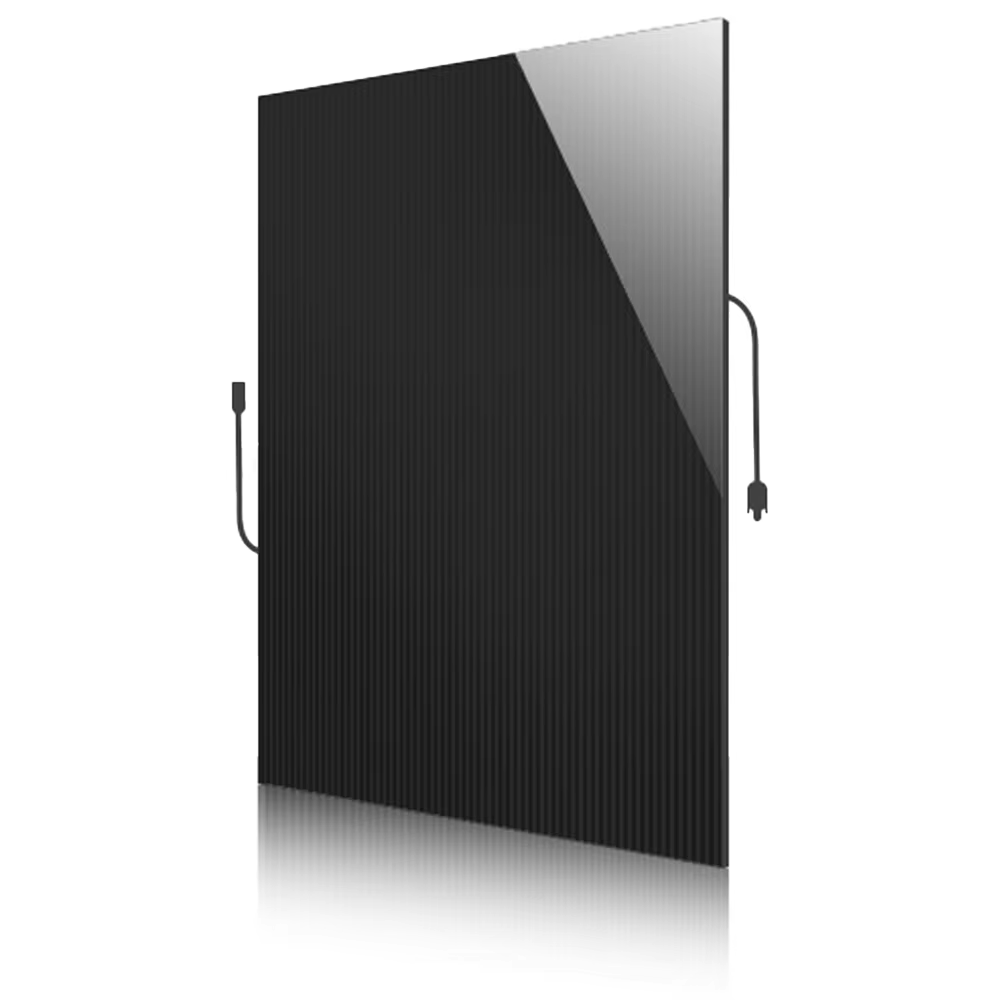
Optical Performance: How Solar Panel Glass Helps Capture More Light for a More Productive Solar Panel
Low-iron glass allows for >91% visible light transmittance
Standard glass blocks 10% of incident sunlight due to high iron content. This is a loss that should not occur considering that the panel efficiency is a photovoltaic. Solar panel glass removed this dead weight with ultra high purity low iron compositions with less than 0.01% iron content. This permits more than 91% transmittance of visible light allowing photons to get absorbed in silicon with less absorption loss. This is achieved with high purity silica and a highly controlled melting. This optical clarity is foundational for maximizing energy yield.
Reflective coatings decrease amount of light that is reflected to the surrounding atmosphere from 4% to <2%.
Even with optically pure glass, reflectivity is ~4% of light at the air to glass interface. To alleviate this, manufacturers utilize nano-scale anti-reflective (AR) coatings, which are deposited in a vacuum. These coatings are designed to ensure that the loss of refraction is reduced to less than 2% for the most photovoltaically important spectral band of 300-1200 μm. This coating provides a 2.5-3% increase in energy production yearly as opposed to uncoated glass. This makes solar panel glass not only a passive component but also an optically active component.
While tempered glass has its benefits , the critical design element glass and backs of solar panels is its tempered glass.
Solar panels must withstand the rigors of the environment and tempered glass must withstand 4 times the impact resistance as standard glass using a rapid and uniform extreme heating and cooling method. Overall this gives tempered glass solar panels a high impact resistance for extreme environments. More importantly tempered glass acts a safety shield. Upon failure, glass shatters into small filmy granules reducing the risk of injury and preventing a total system failure.
Angled and tempered glass has been structural integrity requirements and been certified for stronger glass. Wind, snow, and sun cycles from freezing to extreme temperatures cause cells to lose structural integrity of antiquated grade glass.
Glass must be hail resistant as tempered glass is an unconditional requirement. Glass is tested using the IEC 61215: 2016 hail impact method uses 25 (25mm of 23 m/s) ice balls for glass that withstands extreme weather. Without this structural integrity, glass is vulnurable to cracks, moisture, and electrical failure as a system. All extreme weather tested modules guarantee tempered glass is a safety grade glass that performs for years.
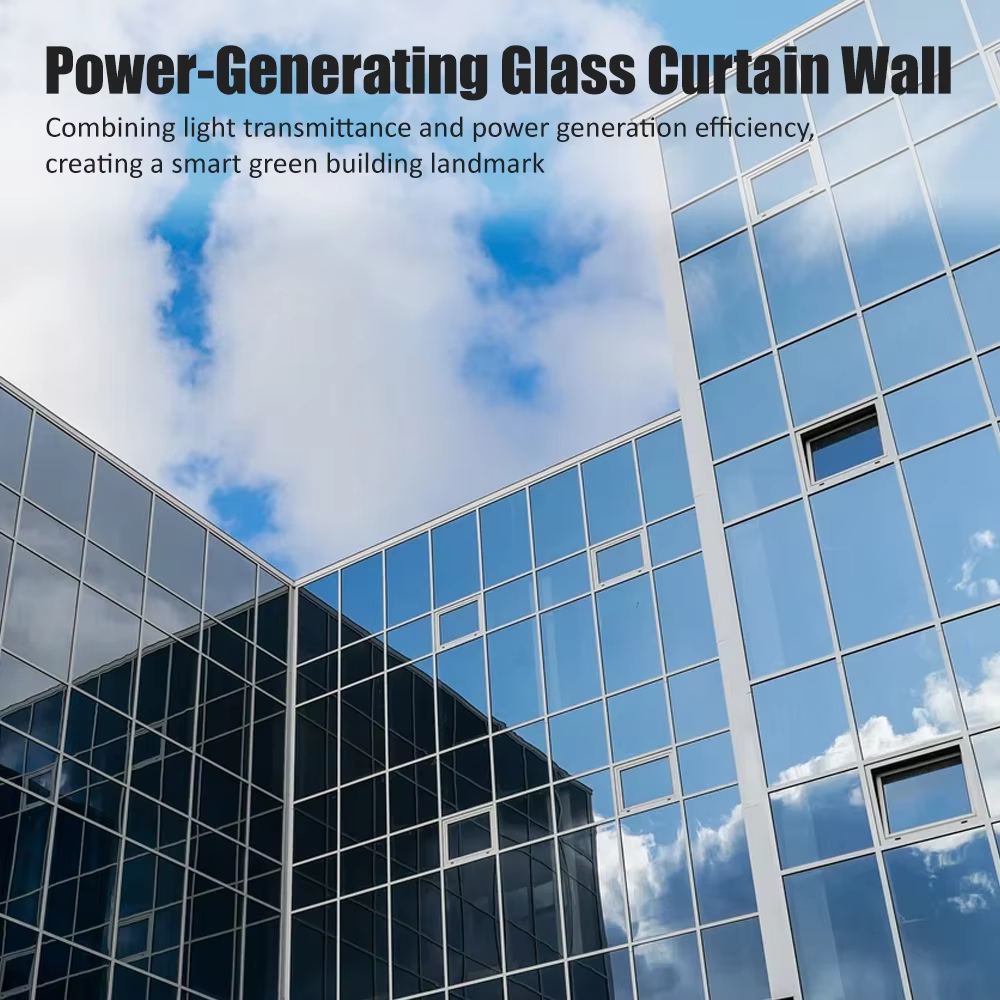
Long-Term Environmental Durability: UV Stability, Moisture Resistance, and Thermal Resilience
Damp heat reliability: zero delamination after 10,000 hrs at 85°C/85% RH
Per IEC 61215, premium solar glass withstands 10,000 hours at 85 degrees Celsius and 85% RH, a test simulating 25 years of tropical conditions. Units that pass this test show zero delamination of glass and encapsulant, resulting from the strong bond and cross-linked polymer chemistry that allows for different thermal expansion. This limits moisture induced corrosion of the cell’s metallization and backsheets, directly contributing to <0.5% average annual power loss, even in high humidity coastal conditions.
UV filtering: >99% of harmful UV-B/C and keeping the silicon cell spectral response
PV-grade glass encapsulant has a selective UV filter that blocks >99% of the harmful 280 to 400 nm wavelength. This prevents EVA yellowing, silicone sealant to become brittle, and AR coating to breakdown, while allowing 92% of the useful visible light to pass. Most importantly, the spectral response is tailored to be in the range of 350 to 1150 nm, which coincidently is the range of peak response for silicon, meaning maximum energy conversion and minimal adverse effects. Studies have shown that the aging of PV modules has improved by 8 to 12 years and after 25 years >80% of the initial Pmax is left.
Material Purity and Manufacturing Standards: What Makes Glass 'PV-Grade'
PV-grade glass is the combination of optical, mechanical, and environmental factors. The ultra-low iron content (<0.02%) glass is manufactured with over 99.5% SiO₂ quartz sand and flotation and acid leaching for > 91% transmittance. Micron-level engineering is achieved through contamination control and automated optical scanning during float glass production. The glass is IEC 61215:2016 certified with thermal cycling, damp heat, and mechanical load tests to prove the glass remains structurally sound for 25+ years and performs optically for those years in the real world.
FAQ
How does low-iron solar panel glass improve light transmittance?
Lower iron content allows almost 91% of light to pass through, reducing iron content to below 0.01% and allowing maximum photon energy absorption at silicon cells.
What role do anti-reflective coatings play in solar panel glass?
Coatings reflect less than 2% of light, increasing annual energy production by > 2% and allowing the glass to fully function as an optical component rather than passively absorbing energy.
Why is tempered glass essential for solar panels?
Glass is essential for solar panels since tempered glass is at least four times more impact resistant, maintaining safety and integrity as glass will fracture into dull, small granules.
What ensures the durability of solar panel glass in extreme conditions?
The solar panel glass undergoes testings such as rapid hail impact and damp heat, ensuring no delaminating, and maintaining performance even with extreme changes in weather.
What defines PV-grade glass in solar panels?
PV-grade glass is characterized by having ultra-low iron content, high-precision manufacturing, and meeting IEC standards in terms of optical quality, mechanical robustness, and environmental durability.